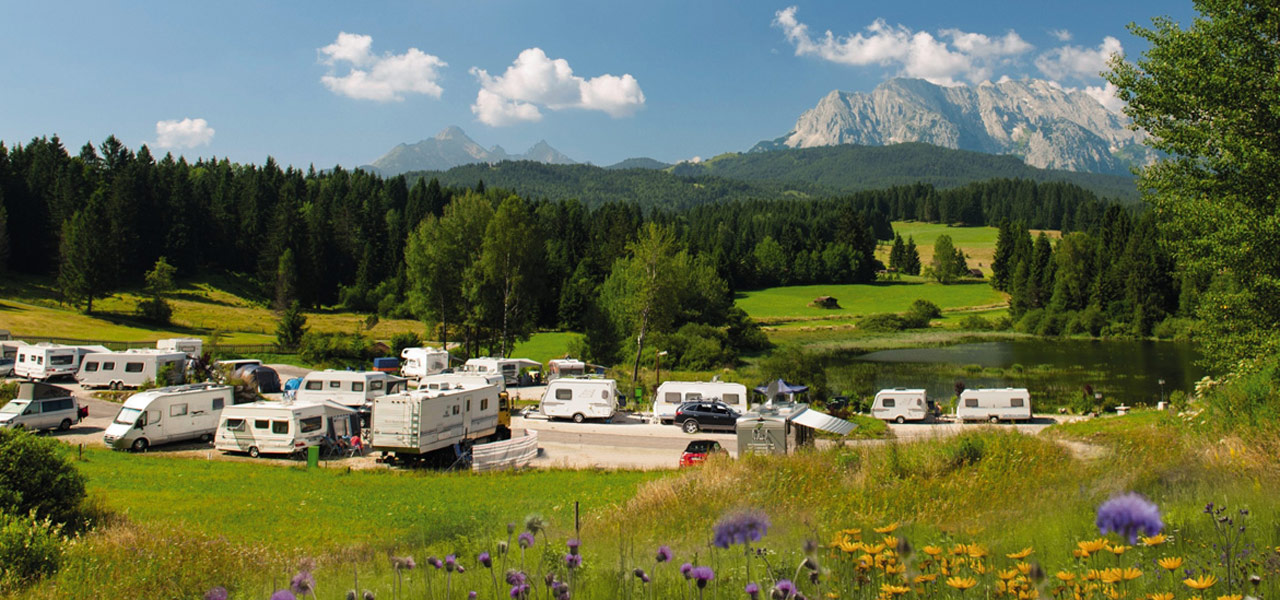
Bathing in lake Ammersee, hiking the banks of river Lech, cycling or just taking a walk, you can take a break from everyday life here.
Picturesque places, baroque churches, comfy pubs and a stunning landscape are waiting for you. Centrally located, it is only a stone"s throw away to Munich or the Fugger town Augsburg. The royal castles are easy to reach and a visit to Legoland is a very popular one day trip among families!

What makes this region one of the most poular attractions for both locals and tourists? The landscape of course! Gemütlichkeit and hospitality? Everything is here!
The places themselves are a crucial point for the region"s attractivity. All the advantages that make the Alpine upland so adorable meet here: an exemplary restored town where modern life pulsates behind the historic walls, neat villages fostering their cultural heritages, an idyllic landscape embedded between river Lech and lake Ammer, which offers various sports options in front of the magnificent alpine scenery.
The Lechrain, the Bavarian-Allemanic language boundary along the river, is a region abundant with churches, monasteries and cultural relics. Vilgertshofen is the place of the well-known Baroque church of pilgrimage "Zur Schmerzhaften Muttergottes" built by the architect Josef Schmuzer. Every year on sunday after Assumption Day (August 15) the Marian brotherhood takes out their silent procession with depiction of scenes from the Old and New Testament. Stations of the Cross can be found in Rott on the way to the Kalvarienberg (752m), the highest point of the district.
Nearby lies Engelsrieder See, whose shores are seamed with idyllic peatbogs and birch forests. The vicarage"s yard in Reichling was also designed by Josef Schmuzer.
St. Nicolaus Parish Church is built on the highest point of the village (736m). It is located above the Lechleite and you can go on hikings along the Hankante to Apfeldorf and Kinsau from there. This landscape has been highly regarded for a long time. Ascertained traces in the south of Pestenacker show evidence of settlements from 4000 - 1800 BC. Numerous fields of burial mounds and Celtic nemetons originate from the Bronze Age (approx. 1550 - 1250 BC) and above all from the Hallstatt period (700- 450 BC). From 15 BC on, the area belonged to the Roman province Raetia. West of river Lech, the Via Claudia lead from Augsburg to Verona. Epfach (Abodiacum) was a significant Roman provincial settlement.
|
Contact | Press | Partner Sites | Imprint | AGB | Login |