A walk through Tauber Valley is a walk through German history. That means getting to know lots of big and small art treasures. In village churches, visitors can find medieval pieces of art that every museum in the world would be happy to display.
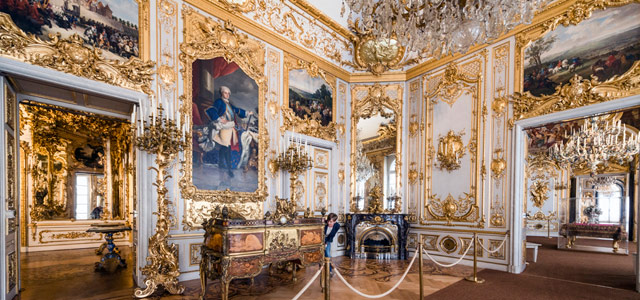
There are palaces with magnificent interiors and baroque gardes, mighty castles, elegantly curved stone bridges patronized by saints, madonnas, shrines, and wayside crosses. These features alone, on top of the untainted nature, create an exceptional kind of recreation.
There were many artists, poets, writers, and folklorists, who were inspired by Tauber Franconia: Matthias Grünewald, Tilman Riemenschneider or Balthasar Neumann have done their part in shaping this region with their parochial and profane art.

Often dubbed the „Pearl of Tauber Valley“, Rothenburg (near the Tauber River well-spring) truly has no shortage of „Spitzweg-Idylls“. Its historic center offers some ideal demonstrations: „Tauberschlösschen“ for example, a former residence of the mayor of the same name (from around 1340 to 1408), or the Imperial Town Museum with the original interior of a claustral kitchen, the oldest of its kind in Germany.
Last but not least: The scenery of the old „Imperial Town Festivals“ or of the „Shepherd Dance“. The town walls and its defense towers let the past come to life. Therefore, it makes perfect sense that many visitors try to capture the atmosphere with their paintbrush, drawing pencil, or camera.
This former Cistercian monastery is a unique treasure in the Main-Tauber district. The minster as well as the most important cloistral buildings were erected between 1157 and 1230. The Cistercians, also known as „God's Gardeners“, started spreading viniculture across Tauber Valley from Bronnbach.
Bronnbach also marked the border between the dioceses of Mainz and Würzburg, respectively. Both dioceses attempted to take control over Bronnbach Monastery. In the 14th century, the monastery came under the patronage of the Earl of Wertheim. But neither Wertheim nor either diocese managed to assume effective rule over Bronnbach Monastery. This independence made it possible that historians today can retrace the clerical, spiritual, and cultural history of the monastery since its creation. To this, the largely preserved monastery owes its significance in the historical field.
|
Contact | Partner Sites | Imprint | AGB | Login | |